

The Ryman Auditorium: The Mother Church Where Nashville Found Its Voice
Before the Ryman Auditorium became one of the most famous music venues in America, it was built for a different kind of song.
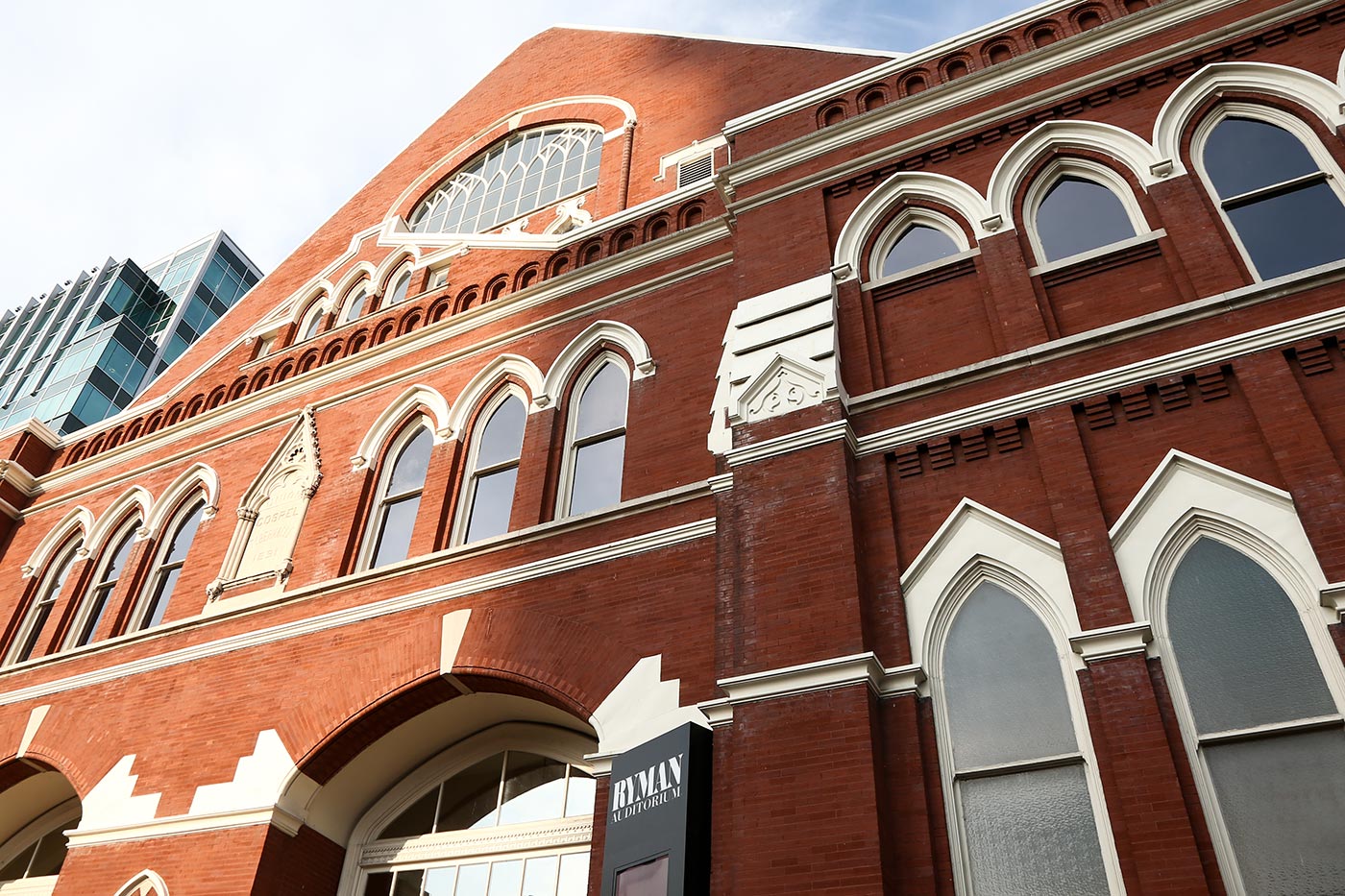
The building that country fans now know as the “Mother Church of Country Music” opened in 1892 as the Union Gospel Tabernacle, a downtown Nashville gathering place created for religious revivals, sermons, and spiritual meetings. Its origin story begins with Captain Thomas G. Ryman, a riverboat businessman who was reportedly moved by the preaching of evangelist Sam Jones and decided to help build a permanent tabernacle in the city. More than 130 years later, that same room is still standing — and still giving people reasons to gather.
That is part of what makes the Ryman different.
It was not born as a polished entertainment palace. It was not built simply to sell tickets. It began as a sacred space, and even after it became a concert hall, that feeling never fully left. The wooden pews, the balcony, the acoustics, and the old brick walls gave the building a sense of reverence that fans and artists still talk about today. Plenty of venues are historic. The Ryman feels haunted in the best possible way — not by ghosts, but by voices.
After Thomas Ryman died in 1904, the Union Gospel Tabernacle gradually became known as Ryman Auditorium in his honor. The name was not officially adopted until decades later, but the connection stuck because Ryman’s vision had given Nashville a room unlike any other.
Long before it became country music’s most famous stage, the Ryman was already a major cultural venue. It hosted concerts, lectures, theater, political events, opera, comedy, and traveling performers. Its reputation grew so strong that it became known as the “Carnegie Hall of the South.” That nickname matters because it reminds people that the Ryman’s story is not only a country music story. It is an American performance story. For more than a century, the room has welcomed artists and public figures from across the cultural map.
Still, the chapter that changed everything began in 1943, when the Grand Ole Opry moved into the Ryman.
At that point, the Opry had already become a country music institution through WSM radio. But the Ryman gave the show a physical home worthy of its growing influence. From 1943 until 1974, the Opry broadcast from the Ryman, and in those years, the building became inseparable from the rise of country music as a national force.
Imagine what those walls heard.
Hank Williams walked that stage. Patsy Cline sang there. Johnny Cash, June Carter, Roy Acuff, Minnie Pearl, Bill Monroe, Loretta Lynn, Dolly Parton, Charley Pride, Porter Wagoner, Tammy Wynette, George Jones, and generations of country legends passed through its wings. The Ryman became more than a venue. It became a proving ground. To step into that circle of light was to become part of the music’s living story.
The room also helped shape bluegrass history. Bill Monroe and his Blue Grass Boys brought a sound to the Ryman stage that would help define an entire genre. Because of moments like that, the Ryman has often been called not only the Mother Church of Country Music, but also a birthplace of bluegrass.
The Opry years gave the building its most famous identity, but they were not easy years for the Ryman itself. By the late 1960s, downtown Nashville was struggling, and the Opry had outgrown the old auditorium. In 1969, plans were announced to move the show to a new theater, and in 1974, the Grand Ole Opry left the Ryman for the modern Grand Ole Opry House.
For many buildings, that would have been the end.
For the Ryman, it became a long pause.
After the Opry moved out, the auditorium’s future was uncertain. It sat largely underused and deteriorating, even as fans and artists continued to understand its significance. The building had too much history to disappear quietly. It had carried too many songs, too many sermons, too many laughs, and too many moments that mattered.
Eventually, Nashville began to understand what it had. The Ryman was not an outdated relic. It was a cultural landmark. Its restoration and rebirth turned it from a nearly forgotten old hall into one of the most beloved performance spaces in the country.
Today, the Ryman is a National Historic Landmark, a world-renowned concert venue, a former home of the Grand Ole Opry, and one of Nashville’s essential stops for anyone who wants to understand the city’s musical soul. It has won Pollstar’s Theatre of the Year award numerous times, and its modern calendar includes country, rock, Americana, bluegrass, gospel, comedy, podcasts, special events, and Opry performances that return to the old room for special runs.
That range is important. The Ryman is not preserved in glass. It is still alive.
Artists still speak about the feeling of standing on its stage. Fans still notice the sound of the room. Visitors still walk through its history and feel like they are closer to the roots of the music they love. The Ryman’s power comes from that rare combination of preservation and motion. It remembers the past without becoming trapped there.
That is why the Ryman matters so much to country culture.
It represents the bridge between church pews and concert seats, between gospel roots and honky-tonk dreams, between radio history and modern touring, between Nashville’s old downtown and the city’s global music identity. It is a reminder that country music did not begin as a product. It began as people gathering around stories, songs, faith, hardship, humor, and hope.
More than a century after its doors first opened, the Ryman still feels like a place where music should be treated with respect. Not silence, exactly — the Ryman has heard plenty of rowdy applause — but respect for the fact that songs can carry history.
The Ryman Auditorium is not just a building in Nashville.
It is the room where country music found one of its clearest voices.
And every time the lights come up, the Mother Church sings again.