

The Digital Jukebox Comeback: Why Bars Still Break Country Songs
Country music has always known the power of a barroom.
Long before a song becomes somebody’s favorite, it often has to survive a room full of real people. Not a quiet room. Not a perfect room. A loud room. A crowded room. A room where people are talking over drinks, laughing with friends, watching the door, playing pool, dancing near the stage, and deciding in real time whether the song coming through the speakers is worth paying attention to.
That is why the jukebox still matters.
It may not look like the old machine glowing in the corner with rows of plastic title cards and a stack of quarters nearby. Today’s jukebox is digital, connected, searchable, app-driven, and often controlled from a phone. But the heart of it is the same.
Someone picks a song.
The room reacts.
And sometimes, that is where the magic starts.
The Barroom Test
A country song can do a lot of things online.
It can go viral. It can land on a playlist. It can rack up streams. It can get clipped, shared, saved, and posted. All of that matters. But there is still something different about hearing a country song in a bar.
A barroom does not care about hype.
It cares about feel.
Does the song fit the room?
Does the chorus lift?
Does it make people look up?
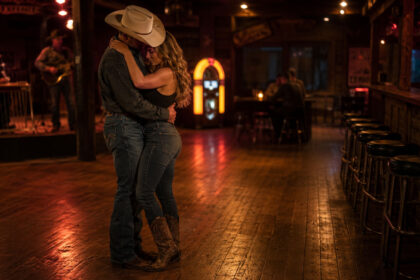
Does it make somebody grab a friend and head toward the dance floor?
Does it sound better when the volume is up and the lights are low?
That is the barroom test.
Country music is built for that test because country songs are made for real-life settings. They belong in trucks, on porches, at cookouts, at dance halls, in small-town bars, and anywhere people gather to turn a long week into a night worth remembering.
When a song works in that environment, it becomes more than a track. It becomes part of the night.
The Jukebox Makes Music Social Again
Streaming made music personal. The jukebox makes it public.
That is the difference.
When someone plays a song through their headphones, it belongs to them. When someone plays a song on a jukebox, it belongs to the room. That choice carries a little risk and a little pride. You are not just selecting music. You are making a statement.
You are saying, “This one needs to be heard right now.”
If the room agrees, you can feel it immediately.
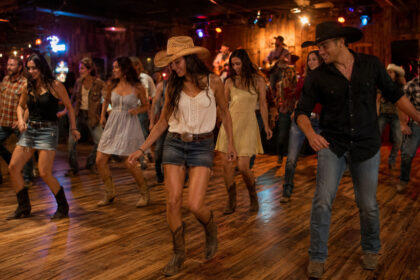
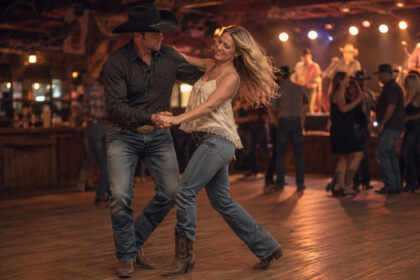
A few people start singing. A group at the bar turns around. Boots hit the floor. Somebody raises a drink. Somebody says, “Who sings this?” That is how discovery used to happen, and in many ways, it still does.
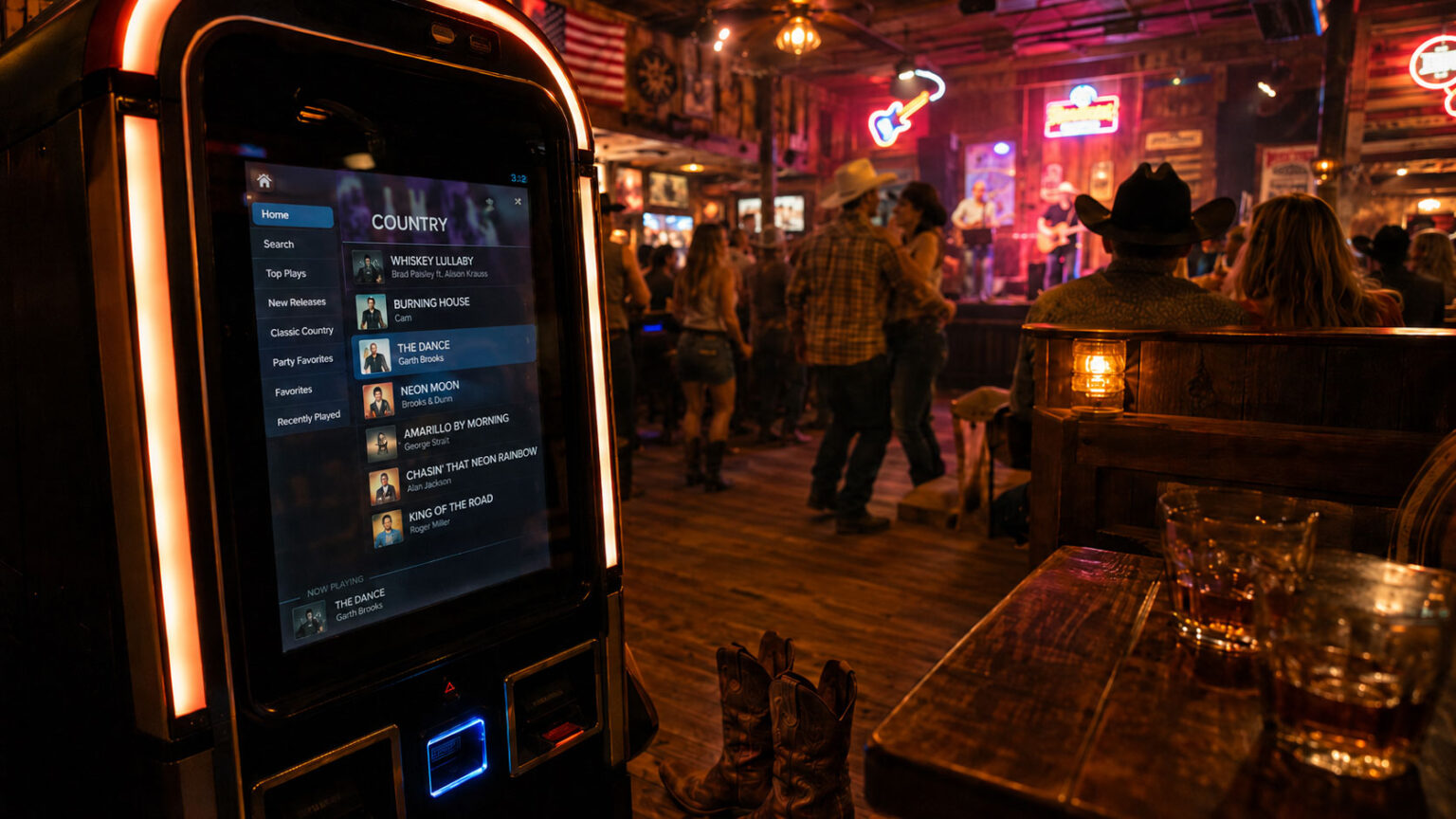
The digital jukebox has brought that feeling into the modern era. Fans can search for songs, queue up favorites, control the mood from their phones, and turn a night out into a shared soundtrack. The technology changed, but the social power stayed the same.
Why Country Songs Fit the Jukebox
Country music has always been one of the best jukebox genres because it understands the room.
A great country song can match almost any barroom mood.
There are heartbreak songs for the person trying not to text somebody. There are drinking songs for the table that just ordered another round. There are dance songs for couples ready to two-step. There are rowdy songs for the late-night crowd. There are nostalgic songs that make strangers sing together. There are hometown songs, truck songs, goodbye songs, comeback songs, and songs that feel like they were written for the exact people sitting three stools down.
That range matters.
A jukebox is not just about what is popular. It is about what fits the moment. Country music gives people a wide emotional menu to choose from. Whether the night calls for old-school honky-tonk, modern bar-song country, red dirt grit, southern rock, bluegrass fire, or a new independent artist with a chorus that hits just right, country gives the room options.
That is why country songs keep finding life in bars.
They are built to be lived with.
Bars Can Still Break Songs
For independent and rising country artists, the digital jukebox can be more than background music.
It can be a discovery tool.
A song that gets played in a bar reaches people differently than a song that only shows up online. It meets listeners while they are already in a country mindset. They are out with friends. They are hearing the song through real speakers. They are tying it to a memory, a place, a face, a dance, a drink, or a moment.
That kind of connection can stick.
If a listener hears a song in a bar and likes it, the next step is easy. They can search the artist, save the track, follow the profile, add the song to a playlist, send it to a friend, or request it again the next time they are out.
That is how a local favorite can start to spread.
Bars still matter because they create real-world repetition. A song that gets requested again and again in the right room starts to feel familiar. Familiar turns into favorite. Favorite turns into fan support.
That is still how country songs grow roots.
The New Grassroots Promotion
For years, artists and labels have focused on radio, streaming, touring, social media, and playlists. Those lanes still matter. But the digital jukebox deserves a place in the conversation, especially for country music.
Why?
Because country fans gather.
They gather in bars, dance halls, restaurants, honky-tonks, VFW halls, festival afterparties, college-town spots, rodeo bars, small-town clubs, and weekend hangouts where music helps define the night. If an artist can get their song into those spaces, they are not just chasing a passive listen. They are entering a room where people are already open to country music.
That is valuable.
A good jukebox strategy is not about forcing a song into places where it does not belong. It is about matching the right song with the right audience. A rowdy bar anthem belongs in a Saturday night room. A slow-burn heartbreak song may hit harder near closing time. A two-step song belongs where people dance. A hometown anthem belongs where people still care about hometowns.
The better the match, the better the chance the song connects.
The Room Tells the Truth
One of the best things about bars is that they are honest.
A song can be promoted heavily and still not move a room. Another song can come from an unknown artist and suddenly make people pay attention. The crowd does not know the marketing plan. They only know how the song feels.
That is good for country music.
It rewards songs that work in real life. It rewards hooks that people remember, lyrics that feel true, and voices that sound like they belong in the room. It also gives artists feedback that no data dashboard can fully replace.
If people ask who sings the song, that matters.
If they request it again, that matters.
If they dance to it, sing it, or save it before they leave, that matters.
The room tells the truth quickly.
Old Idea, New Opportunity
The jukebox comeback is not really about nostalgia.
It is about rediscovering one of country music’s oldest strengths: the shared listening experience.
Digital platforms made music easier to access, but bars still make music communal. They give songs a setting, a crowd, and a chance to become part of someone’s actual life. For country music, that may be more important than ever.
Because country songs were never meant to live only in headphones.
They were meant to be sung with friends. Played too loud. Chosen at the wrong time. Chosen at the perfect time. Debated, repeated, danced to, cried through, and remembered long after the night is over.
That is why bars still break country songs.
The jukebox may be digital now.
But the feeling is still pure country.