

The New Honky-Tonk: How Country Bars Became Cool Again
For a while, the honky-tonk was treated like a piece of country music history.
It was the place people talked about in old songs. A room full of neon beer signs, sawdust floors, steel guitars, heartbreak, cheap drinks, and someone trying to forget a name they still remembered too well. It belonged to another era, another generation, another kind of country music.
But lately, something has changed.
The honky-tonk is not just surviving. It is coming back with new energy.
Country bars, dance halls, live music rooms, and neon-lit stages are becoming cool again, not because they are trying to be trendy, but because people are hungry for places that feel real. In a world where so much music is discovered through screens, playlists, and quick clips, the country bar still offers something that cannot be streamed.
It gives the music a room.
More Than a Bar
A great honky-tonk has never been just a place to buy a drink.
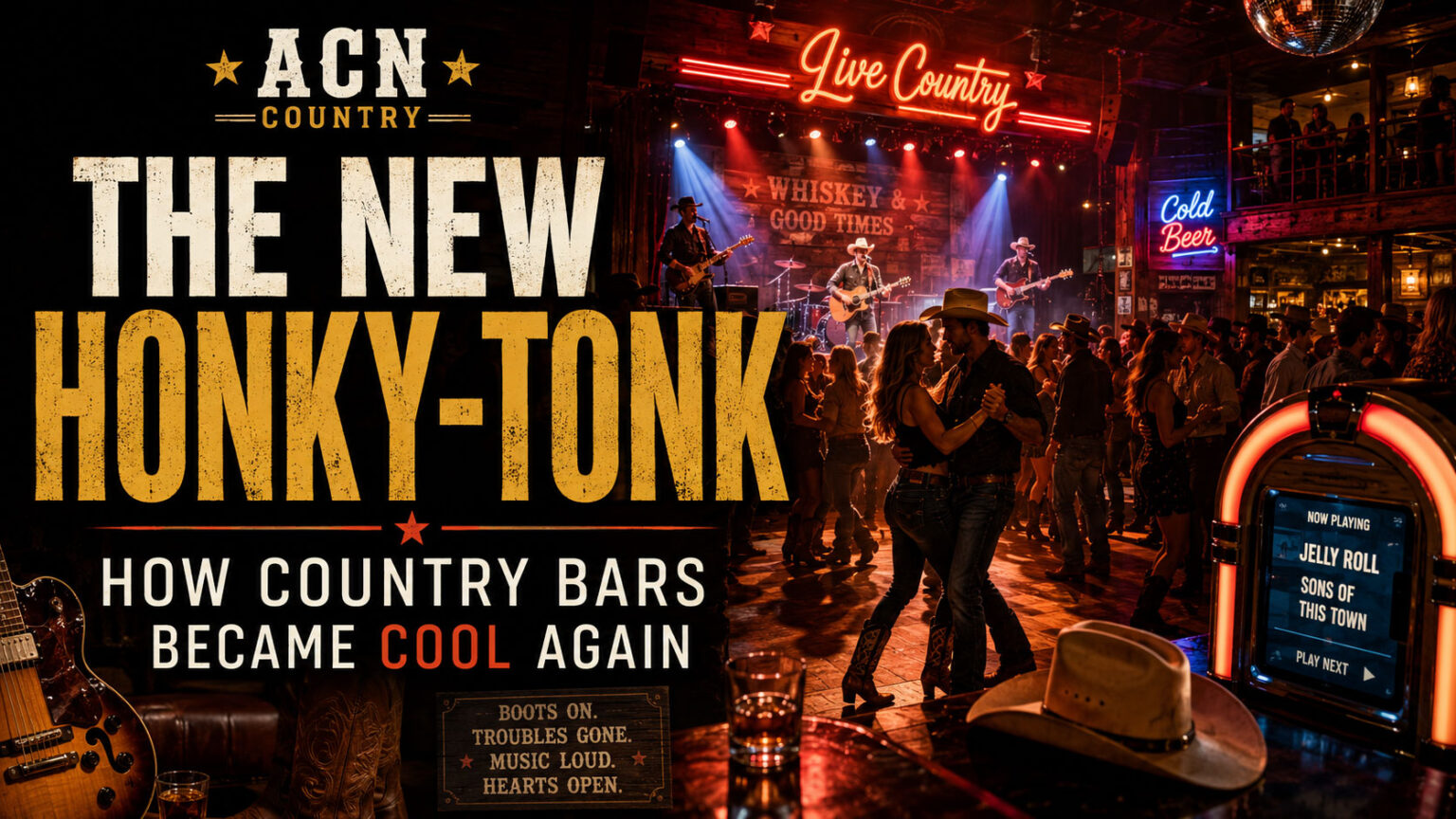
It is a gathering place. It is a dance floor. It is a stage. It is where new songs get tested, old songs get remembered, strangers become regulars, and a chorus can turn into a room-wide singalong before anyone knows who started it.
The best country bars have a rhythm of their own.
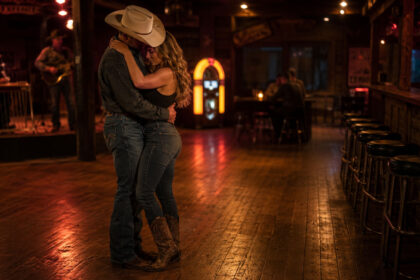
Boots hit the floor. The band counts off. Someone drops money in the jukebox. A couple dances close in the corner. A group of friends raises a round. A singer leans into a microphone and tries to make the room believe every word.
That is the magic.
Honky-tonks work because they make country music physical. You do not just hear the song. You feel the bass in the floor, the crowd around you, the lights over the stage, and the shared moment when everyone knows they are part of the same night.
That feeling is hard to replace.
Why Younger Fans Are Finding the Dance Floor
One reason country bars feel fresh again is that younger fans are discovering what older fans already knew: country music is better when it is shared.
Streaming made music easier to find, but it also made listening more private. A song can become part of your day through headphones, a phone, or a truck speaker. That is great, but it is not the same as hearing it in a room full of people who all react at once.
The honky-tonk gives country music its social life back.
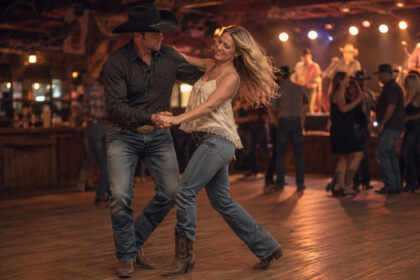
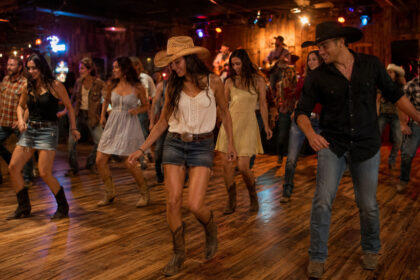
Line dancing, two-stepping, live bands, DJ nights, acoustic rounds, and country-themed events have opened the door for fans who may not have grown up in traditional country spaces. Some come for the fashion. Some come for the dancing. Some come for the energy. Some come because they heard a country song online and wanted to feel what it sounded like in the wild.
Once they get there, the room does the rest.
There is something timeless about a dance floor. You do not have to know every lyric. You do not have to be an expert. You just have to show up, move a little, and let the music pull you in.
Neon Never Went Out of Style
Part of the new honky-tonk appeal is visual.
Country bars have always had a look: neon signs, wood walls, worn stages, cowboy hats, boots, guitars, beer lights, dance floors, and that golden glow that makes every Saturday night feel like a memory before it is even over.
Now that look is showing up everywhere.
Country style has moved into fashion, social media, photography, music videos, and weekend nightlife. People want spaces that feel like something. A good honky-tonk does not look like a generic club. It has character. It has history. It has a little dust on it, even when it is brand new.
That matters.
Fans are drawn to places that feel authentic, or at least feel like they are connected to something bigger than a regular night out. A honky-tonk gives them that. It gives them a stage, a soundtrack, and a reason to dress the part.
Boots and denim make more sense under neon.
The Jukebox Still Matters
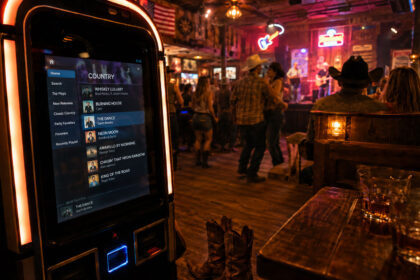
Even in the age of streaming, the jukebox still has power.
There is a difference between choosing a song for yourself and choosing one for the whole room. A jukebox pick is a tiny act of confidence. You are saying, “This one belongs here.” If the room agrees, you can feel it.
That is why country songs still come alive in bars.
A barroom anthem can build a different kind of momentum than a song that only lives online. When people hear it while they are out with friends, dancing, flirting, laughing, or healing from a long week, the song becomes attached to a real experience. It becomes part of the night.
That is how songs turn into memories.
The digital jukebox may look different than the old one in the corner, but the idea is the same. Country fans still want to control the soundtrack. They still want songs that match the room. They still want music that can turn a regular bar into a scene from their own life.
A Home for Working Artists
The honky-tonk comeback is also good news for artists.
Before a song becomes a hit, it often has to survive a room.
Country bars are where artists learn how to hold attention. They learn which lyrics land, which choruses lift, which stories make people quiet, and which songs make a dance floor move. A crowd will tell the truth quickly. If the song works, people respond. If it does not, the room keeps talking.
That kind of feedback is valuable.
For independent artists especially, country bars remain one of the most important proving grounds. A good live set can turn casual listeners into fans. A packed room can sell merch, build follows, grow email lists, move streaming numbers, and create the kind of connection no algorithm can fake.
Country music was built in rooms like that.
It still needs them.
Old Soul, New Energy
The new honky-tonk movement works because it does not have to choose between old and new.
A modern country bar can have classic neon and a digital jukebox. It can have a live band one night and a DJ spinning country remixes the next. It can play George Strait, Lainey Wilson, Cody Johnson, Zach Top, Brooks & Dunn, Morgan Wallen, Miranda Lambert, Turnpike Troubadours, and an unknown independent artist all in the same night.
That mix is part of the appeal.
The honky-tonk is not cool again because it became something else. It is cool again because people are rediscovering what made it matter in the first place.
It is a place where country music has weight.
Songs are louder there. Stories feel closer there. Heartbreak gets a little easier there. Celebration gets a little bigger there. And for a few hours, everybody in the room gets to live inside the music instead of just listening to it.
Why the Honky-Tonk Still Wins
Country music has always needed places to gather.
The front porch. The dance hall. The county fair. The festival field. The bar at the edge of town. The downtown neon strip. The small stage where nobody famous is playing yet, but everybody in the room knows something real is happening.
The honky-tonk belongs on that list.
It is where songs get tested, memories get made, artists get stronger, and fans remember why country music works best when it is shared. The new honky-tonk may have brighter lights, better sound, sharper style, and more people posting clips from the dance floor, but the heart of it is the same as it ever was.
A song.
A room.
A reason to stay a little longer.
That is why country bars became cool again.
They never stopped being country. The rest of the world just found its way back to the dance floor.