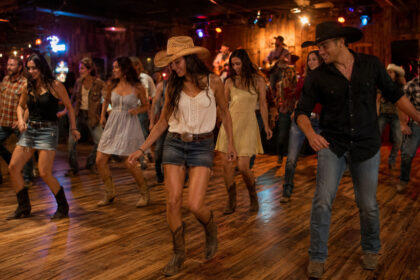


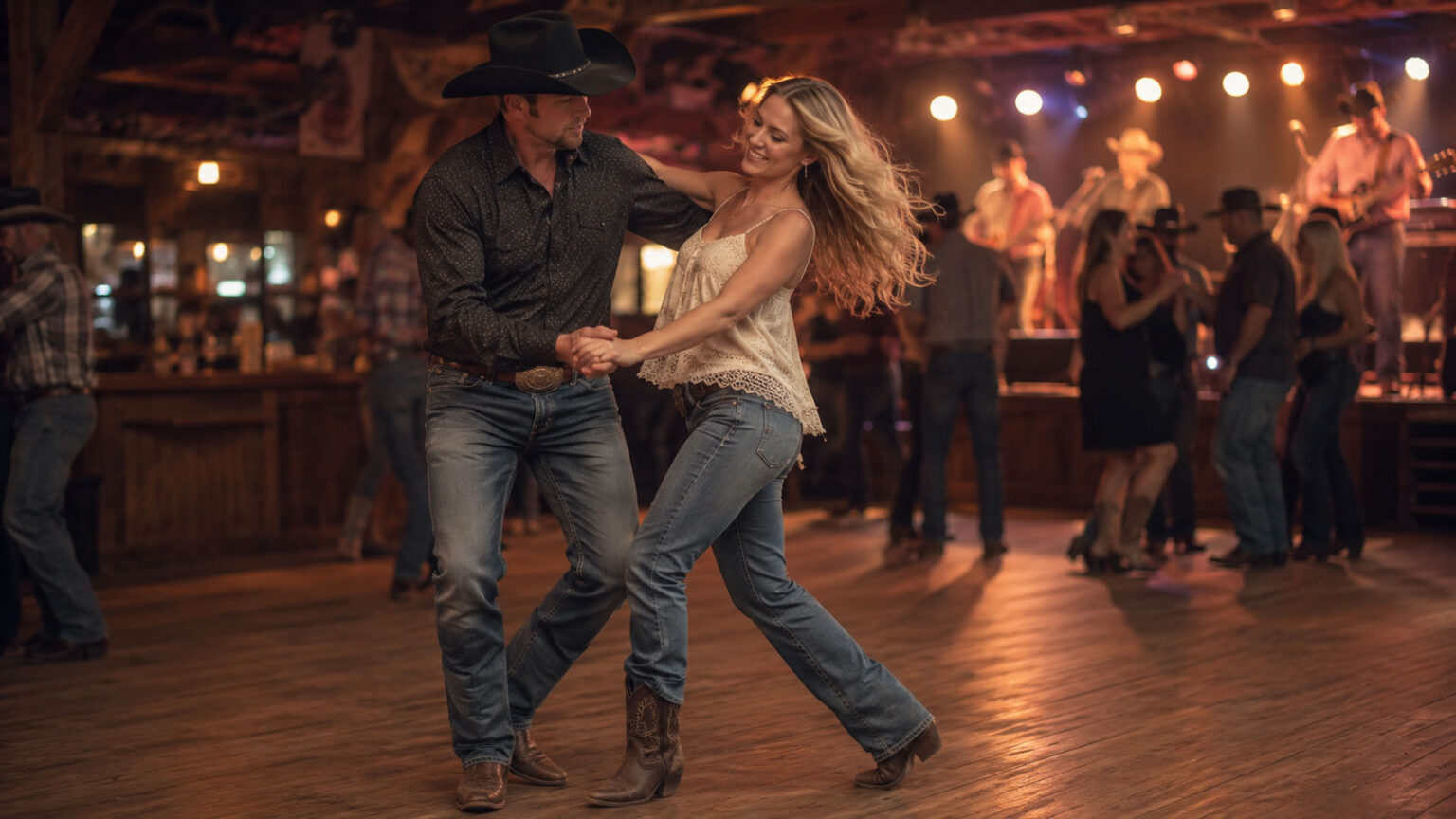
The Songs That Make a Honky-Tonk Move
A good honky-tonk does not wake up all at once.
It starts slow.
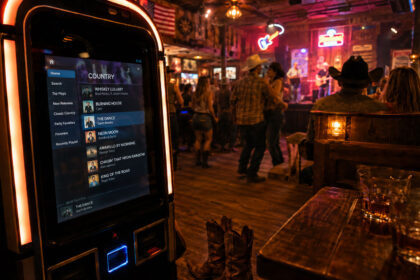
A few people at the bar. A couple near the dance floor. Someone checking the jukebox. A band tuning guitars under warm lights. Boots resting on a rail. Neon buzzing against the wall. The kind of room that feels like it is waiting for the right song to tell it what kind of night it is going to be.
Then something changes.
The first familiar guitar lick hits. A few heads turn. Somebody grins. A table starts singing. A couple steps onto the floor. The bartender looks up because he has seen this happen before. One song becomes the spark, and suddenly the whole room has a pulse.
That is the magic of a honky-tonk.
It is not just the building. It is not just the beer signs, the stage, the jukebox, or the hardwood floor. A honky-tonk comes alive when the right songs hit the room at the right time.
The First Song Has to Open the Door
Every great country night needs a starting point.
The opening song does not always have to be the biggest hit in the room. It just has to make people comfortable enough to lean in. Sometimes it is a familiar classic. Sometimes it is a modern bar anthem. Sometimes it is a two-step song with just enough groove to invite people out before they have had time to talk themselves out of dancing.
That first song matters because it sets the mood.
A honky-tonk crowd can be shy at first. People are still arriving, finding friends, ordering drinks, watching the room, and deciding whether this is going to be a sit-and-talk kind of night or a boots-on-the-floor kind of night.
A good song makes that decision easier.
It says, “Come on. This is what we came here for.”
The Two-Step Song Still Rules the Floor
If a honky-tonk has a dance floor, the two-step song is still king.
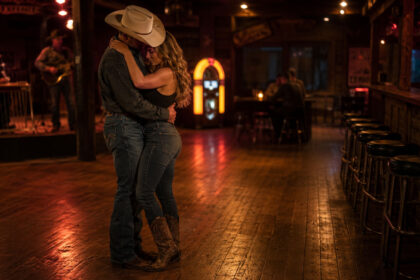
There is something timeless about a country song with the right rhythm. Not too fast. Not too slow. Just enough movement to let couples find each other and settle into the music. The two-step gives country nightlife its shape. It turns a room full of strangers into pairs moving in circles, passing under lights, laughing through missed steps, and looking a little smoother by the second chorus.
Those songs do not need to be flashy.
They need feel.
A steady beat. A strong melody. A lyric that does not get in the way of the dance. A groove that lets people move without thinking too much. The best two-step songs become part of the room’s muscle memory. People hear the intro and already know where their feet are supposed to go.
That is why danceable country never really disappears.
A honky-tonk will always need songs that give people a reason to take someone’s hand.
The Singalong Changes Everything
There is a special moment in a country bar when the crowd takes over.
It usually happens on a chorus.
The band steps back a little. The volume of the room rises. Friends throw arms around each other. Someone sings too loud and does not care. People who did not come together suddenly know the same words at the same time.
That is when a honky-tonk stops being a place and becomes a memory.
Singalong songs are essential because they create community fast. They do not require perfect dancers or serious listeners. They only require a chorus big enough to belong to everybody.
Some songs work because they are nostalgic. Some work because they are rowdy. Some work because they hit an old heartbreak people still carry around. A great singalong gives the room permission to feel something together.
In country music, that can be joy, regret, pride, humor, heartache, or all of it in the same night.
Barroom Anthems Bring the Heat
Every honky-tonk needs a few songs that turn the energy up.
These are the songs built for raised glasses, loud choruses, clapping hands, and friends who came ready to let the week go. They may be drinking songs, small-town songs, truck songs, party songs, or country-rock burners with enough edge to make the room feel bigger than it is.
Barroom anthems are not subtle.
They are supposed to hit.
The drums kick harder. The guitars growl. The hook comes fast. The chorus feels like it was written for a Saturday night crowd that already knows the words by the second time around.
These songs matter because they give the room momentum. A slow night can turn quickly if the right anthem lands at the right time. Suddenly people are moving closer to the stage, the jukebox line gets longer, and the bar feels like it has officially crossed into the part of the night people will talk about tomorrow.
The Heartbreak Song Has Its Place
A honky-tonk is not all noise and celebration.
Country bars have always made room for heartbreak.
Sometimes the song that moves the room is not the loudest one. It is the one that makes people go quiet. The one that pulls somebody back to an old love, a bad decision, a missed chance, or a person they still think about when the lights get low.
Heartbreak songs work in honky-tonks because the room understands them.
A bar is where people celebrate, but it is also where they carry things. Regret. Loneliness. Old memories. Fresh endings. The hope that maybe one more song will make the night easier.
That is why a great sad country song can stop a room in its tracks.
It may not fill the dance floor, but it changes the temperature. It reminds everyone that country music is not just there to entertain them. It is there to tell the truth for them when they cannot say it themselves.
Closing-Time Songs Hit Different
There is a different kind of country song for the end of the night.
The crowd has thinned. The floor is sticky. The neon feels softer. The loudest people have either gone home or run out of steam. The bartender is stacking glasses. Someone is still trying to make one last conversation matter.
Closing-time songs do not need to be fast.
They need to feel final.
This is where the late-night ballads, regret songs, old classics, and slow dances earn their place. They give the night a landing. They let people leave with a feeling instead of just a receipt.
The right closing song can make a regular night feel like a scene from someone’s life.
It is the soundtrack to walking out under streetlights, starting the truck, checking the phone, or sitting for one extra minute before going home.
Country music understands those moments better than almost any genre.
New Songs Have to Prove Themselves
A honky-tonk can be tough on new music.
People may show up wanting songs they already know. They want familiar choruses, trusted artists, and melodies that feel like old friends. But that does not mean a new song cannot break through.
It just has to earn the room.
A new country song that works in a honky-tonk usually has one of three things: a chorus people can catch fast, a groove that makes the floor move, or a lyric that feels so real people stop and listen. If it has all three, it has a chance.
That is why bars still matter for rising artists.
A playlist can introduce a song. A social clip can spark interest. But a honky-tonk proves whether the song can live with real people in real time. If someone hears it once and asks who sings it, that is a win. If they request it the next time, that is how momentum starts.
The room decides quickly.
The Best Honky-Tonk Songs Feel Lived In
At the end of the night, the songs that make a honky-tonk move all share something.
They feel lived in.
Whether they are rowdy or sad, old or new, fast or slow, they sound like they belong to people who have worked all week, loved hard, lost something, found something, or came out looking for a little relief. A great honky-tonk song does not float above the room. It gets down in it.
It knows the sound of boots on wood.
It knows the glow of neon on a late-night face.
It knows the difference between dancing because you are happy and dancing because you are trying not to think.
That is why country bars still depend on the song.
Not the trend.
Not the hype.
Not the algorithm.
The song.
Because when the right one hits, the room moves.
And when the room moves, the honky-tonk becomes exactly what it was built to be.